
The dealership is not the only place your warranty survives
If you own a BMW, Mercedes-Benz, Audi or Porsche, the first myth to drop is that the car has to go back to the franchised dealer for every service or the warranty dies. It doesn’t. A manufacturer warranty covers defects in the car. What keeps it valid is servicing done correctly and on the manufacturer’s schedule, with parts that meet the manufacturer’s specifications. Where that work happens is a separate question. For a large share of owners, a good independent specialist does it for less money, and with more direct contact with the person actually turning the spanner.
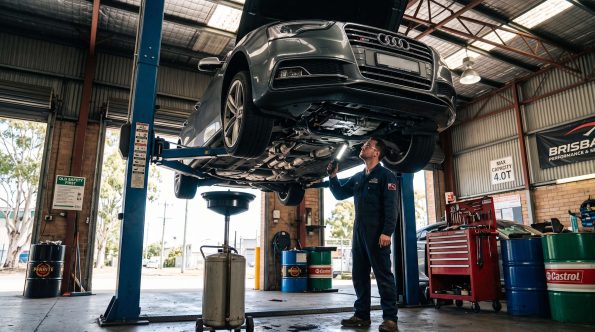
That distinction matters more with each new model. The current BMW 7 Series and i7, the latest Mercedes S-Class and E-Class, the newest Audi range and today’s Porsches all carry far more onboard electronics and over-the-air complexity than the cars they replaced. Servicing them well now leans on diagnostic access as much as on oil and filters. That capability is no longer locked inside the dealer network.
What the warranty actually asks of you
Two things decide a warranty claim: was the car serviced on the schedule in its logbook, and was it serviced to the correct specification. Miss an interval, or fit a part below the manufacturer’s standard, and the maker can decline a related claim. Service on time with the right parts and fluids, and it can’t.
Most owners get the next part wrong. A warranty stays valid when the work is done correctly and on schedule, wherever it happens, not only at a dealership. An independent workshop that follows the logbook intervals, uses OEM or equivalent-specification parts and dates every stamp keeps the warranty and the resale history intact. What you’re really protecting is the paper trail. Dated stamps in the logbook and itemised invoices naming the parts and fluids read as an unbroken record. The next buyer, and their inspector, will read that history before they read a word the seller says.
What a credible independent specialist looks like
Not every general workshop can service a modern Euro car to this standard, so picking the right independent is most of the decision. Set the bar high. You want marque-specific diagnostic equipment, technicians who work on the badge week in and week out, genuine or equivalent-specification parts, and logbook stamping that matches the manufacturer’s schedule exactly.
Some independents have built their whole business around exactly this. Ricci Jandu, owner of Wayne Park Auto, a European car servicing specialist in Milton, Brisbane, has serviced marques like BMW, Mercedes-Benz, Audi and Porsche since 1986. He says, “You often pay a premium for a Euro car, but you shouldn’t have to pay an unnecessary premium to have it repaired or serviced.”
They stamp the logbook to the manufacturer’s schedule so the car’s service history and warranty stay intact. Diagnostic tooling is what separates a specialist from a good general mechanic. A modern Euro car flags faults in software long before they surface as a noise or a warning light, and reading those codes takes the brand’s own software, not a generic reader.
Before you book, pin a few things down on the phone. Does the workshop run the diagnostic software for your specific brand, or just a generic code reader? Will the invoice list parts and fluids by their actual specification? Is the logbook stamped and dated at the correct interval? A shop that handles European cars every day answers all of that without missing a beat. If the answers come back vague, that tells you plenty.
The cost picture is real, but read it carefully
Independent servicing on a European car usually costs less than the franchised dealer, often a lot less on labour rates and on parts that carry a dealer margin. Once a car is out of its capped-price period, that gap can add up over a few years of ownership.
The saving isn’t automatic, though. A dealer service during the capped-price window can come in close to an independent quote, sometimes under it, because the maker subsidises those early services to keep cars in the network. So compare like for like: the same interval, the same parts specification, right down to the inspection items on the sheet. A quote that looks cheaper because it skips a brake-fluid change or a cabin filter isn’t a better deal. It’s a smaller service.
When the dealership still earns its price
Sometimes the franchised dealer really is the right call. If the car has an open recall, or a warranty or goodwill claim, that work goes through the dealer regardless of where you normally service. A fault that needs the very latest factory software, or a part that’s dealer-only at launch, is another case where the network has it first. Dealers often have better quality courtesy cars – not every Euro car owner wants to be stuck in a 200,000km Barina for several days while their pride and joy is fixed.
For routine logbook servicing on a car that’s running well, none of that applies, and that’s the bulk of what most owners spend on maintenance across a car’s life.
Before you switch, do this
Keep the logbook in the car, and check it’s filled in properly after every visit. Hang on to every invoice, paper or digital, because that itemised record is what proves specification if a claim is ever questioned. Confirm the workshop uses fluids to the exact manufacturer approval printed in your handbook. Euro engines and transmissions can be fussy about oil grades and long-life coolants in a way a lot of older cars never were.
Unless you own a hypercar, none of this is exotic once you know what the warranty is actually asking for. Servicing a European car away from the dealer is a normal, defensible choice. Get the schedule and the specification right and keep your paperwork, and the car’s history holds up just as well as if the dealer had done every service.


