
What to do after a car accident in Queensland (and how a CTP injury claim works)
A crash on a Queensland road sets off two separate processes at once: the immediate obligations at the scene, and the slower question of who pays for the damage and any injuries. Getting the first right protects the second. The steps below follow Queensland law and the state’s compulsory third party (CTP) insurance scheme, and they apply whether the incident is a low-speed knock in a Brisbane car park or a highway collision on the Bruce.
At the scene: the legal obligations
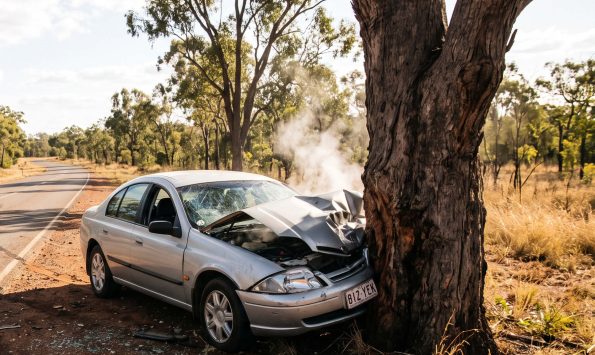
Every driver involved in a crash must stop. Leaving the scene of an accident that has caused injury or significant property damage is an offence under the Transport Operations (Road Use Management) Act, and the penalties are heavier where a person has been hurt.
Once stopped, drivers are required to give their name and address, along with the vehicle’s registration number, to anyone with reasonable grounds to ask, including other drivers and injured people, as well as police. If a driver is unconscious or otherwise unable to exchange details, that information should be passed on as soon as practicable.
Where anyone is injured or killed, or where a vehicle has to be towed, the crash must be reported to police. It also has to be reported if another party fails to stop and hand over their details, or refuses to provide them. In practice, reporting within 24 hours and obtaining a police report or event number is worth doing even for minor collisions, because it creates an independent record that insurers and, later, a CTP claim can rely on.
What to record before leaving
Memory fades and vehicles get moved, so the scene is the one chance to capture evidence cleanly. Useful details include the other vehicle’s registration, its make and model, the driver’s name and licence details, and the insurer’s name if it is offered. Photographs should cover the damage to both vehicles, the position of the cars before anything is shifted, skid marks, road signs, traffic signals and the general layout of the intersection or lane.
Independent witnesses matter more than most drivers expect. A passer-by who saw who had the green light can settle a disputed claim that would otherwise turn into one driver’s word against the other, so a name and phone number is worth collecting on the spot. The time, date, weather and lighting are also worth noting, particularly for a crash at dawn or dusk when sun glare is a factor.
Property damage and repairs
The damage side of a crash is handled through ordinary motor insurance, and it moves on its own timeline. A driver with comprehensive cover lodges a claim with their own insurer and pays the applicable excess, and the insurers then sort out liability between themselves. A driver with third party property cover, or none at all, deals directly with the at-fault party or that party’s insurer to recover repair costs.
Queensland registration includes CTP insurance, but CTP does not cover vehicle repairs or property. It covers personal injury only. That distinction trips people up, because it means the compulsory premium paid at registration does nothing for a bent panel and everything for a hurt neck.
Where injuries are involved: making a CTP claim
Queensland’s CTP insurance is compulsory and attached to every registered vehicle, and it is the at-fault driver’s CTP insurer, not the injured person’s own insurer, that funds a personal injury claim after a crash. That claim is a separate process from any property-damage or repair dispute and carries its own lodgement steps and time limits, so getting the process right early matters. If injuries are involved it is worth understanding how the scheme works before signing anything, and Queensland firms including Smiths Lawyers run motor vehicle injury claims on a no win, no fee basis. Smiths Lawyers is a Queensland compensation practice that has handled injury claims, including car and road accident matters, since 1996.
The scheme is fault-based, which means a claimant generally needs to show that another driver’s negligence caused the injury. The formal starting point is the Notice of Accident Claim Form, lodged with the at-fault driver’s CTP insurer. Strict time limits apply: as a general rule the notice must be given within nine months of the accident or the first appearance of symptoms, and sooner again if a lawyer is consulted first. Claims can still proceed after a delay in some circumstances, but a late notice has to be explained, so acting early removes an avoidable obstacle.
A CTP claim can cover medical and rehabilitation expenses, lost income where the injury has kept a person off work, care and assistance, and general damages for pain and suffering. The amount turns on the severity of the injury and its effect on earning capacity, which is why medical treatment and a clear record of symptoms from the outset carry weight later. Not every crash produces a viable injury claim, and a minor knock with no lasting effect may not be worth pursuing, but a genuine injury caused by another driver is precisely what the scheme exists to compensate.
A short checklist
For quick reference after a Queensland crash, the sequence is:
- Stop and check for injuries; call 000 if anyone is hurt.
- Exchange names and addresses with the other drivers, along with registration numbers.
- Report to police where required, and get a report or event number.
- Photograph the scene and collect witness contact details.
- Lodge the property claim with the relevant motor insurer.
- For any injury, get medical treatment and keep records, then lodge a CTP notice within the time limit.
The two processes run in parallel and do not wait for each other. Repairs can be underway while an injury claim is still being assessed, and starting both promptly keeps the options open on each.


