
Artificial intelligence has changed pretty much every aspect of our everyday lives. This includes everything, from how we shop online and use our phones to what we decide to watch on Netflix and how we do our jobs.
While many people might not be aware of it, AI has also influenced our driving experience. In particular, it now plays a significant role in traffic management, rule enforcement, and driver monitoring.
Given these changes, it is worth taking the time to understand how this technology works and what it means for you. That’s why we’ve put together this post. In it, we’ll look at the rise of AI on Australian roads and what it means for you as a driver. Hopefully, it will help you to drive more safely and avoid unnecessary fines.
What is Artificial Intelligence?
Artificial Intelligence (AI) is a branch of computer science that was officially launched as an academic field in 1956. It relates to systems that are capable of performing tasks that typically require human intelligence in order to be completed. Typically, these could be:
- Problem-solving
- Reasoning
- Learning
- Perception
It uses a mix of data, computing power and algorithms to identify trends and patterns, predict behaviour, and make accurate decisions.
How Exactly Is AI Being Used on Australian Roads?
On Australian roads, AI technology is increasingly being used to monitor traffic, detect unsafe behaviour, and improve overall road safety. Usually, it works quietly in the background, without drivers even realising it.
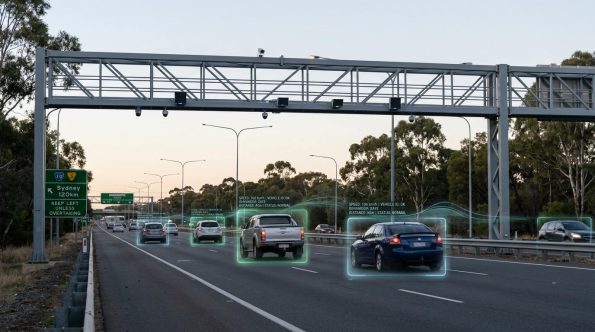
One of the most common uses is AI traffic cameras in Australia. These cameras can identify behaviour like speeding, mobile phone use, and whether a driver is wearing a seatbelt. All of which, of course, are illegal. They work by analysing images in real time and flagging potential offences, which are then reviewed by the authorities.
Another important development is the use of AI in smart traffic management systems. These systems operate traffic lights based on various factors, including congestion. They go a long way towards ensuring that traffic moves more smoothly during peak times.
Additionally, AI is now a major component of automated road enforcement in Australia. They are increasingly being employed to assist authorities in identifying road rule breaches without needing a police officer present.
How Have AI Traffic Cameras Impacted Road Enforcement in Australia?
One of the biggest changes Aussie drivers have noticed is in AI-powered enforcement. Over the last few years, many roadside cameras have been upgraded to more advanced models that are designed to detect behaviours that increase the risk of accidents.
Mobile phone detection cameras are a clear example. These cameras can detect if a driver is holding or using a phone while driving. They are so advanced that they can even determine this when drivers are motoring at high speeds and in different lighting conditions.
Similarly, seatbelt detection cameras are being used to check whether drivers and their passengers are wearing seat belts correctly. These systems can identify anyone who is not doing this properly and, after a police review, make it easier for them to issue you a fine.
Should this happen to you, it’s worth talking to law firms like Astor Legal, who can advise you of your rights.
Is AI Making Australian Roads Safer?
The main goal of introducing AI for road monitoring is to improve road safety for all drivers. Given that it is designed to detect unsafe behaviour, it is hard to argue that it is not effective in achieving this objective.
Early reports suggest that AI road safety technology has already contributed to a reduction in risky driver behaviours. One possible reason why is that many have been issued fines or demerit points for being caught by them.
Aside from reducing potentially more dangerous behaviour on the road, AI has also helped authorities in other ways. Most notably, by analysing traffic jams and patterns and identifying areas where accidents are more likely to occur. This information gained from them can be used to improve road design and reduce hazards across the country.
Are There Privacy Concerns Around AI on Australian Roads?
With the increased use of AI, some drivers have expressed concerns about privacy and data collection. It is perfectly legitimate and natural to wonder how much information is being captured and what happens to it after it’s been collated.
Well, you should be aware that AI systems do collect images and data, especially when they are being used to detect offences. However, these systems are designed to focus on road safety and enforcement of compliance, rather than on general “Big Brother” type surveillance.
Additionally, there are clear regulations in place to ensure this information is handled responsibly. Subsequently, authorities are mandated to follow strict guidelines on how any data they capture is stored, accessed, and used.
What is The Future of AI in Transport and Autonomous Vehicles?
In the coming years, AI is likely to be central to how transport systems operate across Australia, and possibly even the world. Indeed, new technologies are being introduced and developed to further improve both safety and efficiency on the road.
One example is driver-monitoring technology, which now features in many modern vehicle brands. They can detect and alert the driver to signs of fatigue or distraction, which can help to prevent accidents before they happen.
There is also growing interest in the future of autonomous vehicles in Australia. While fully self-driving cars are several years away, many vehicles already include features such as lane assistance and adaptive cruise control that can preempt it.


