
For many people, long road trips bring a feeling of freedom and awaken a desire for adventure. However, there is one issue with long road trips. Even if it’s usually a very enjoyable experience, somewhere around the fourth hour, your legs will start to send a not-so-positive message. Especially for people who frequently go on road trips, the importance of leg health is something that they should be very aware of.
Why Do Your Legs Start To Feel Numb?
When you are walking, you are pumping your muscles, and the blood goes back up towards your heart. When you do not move your legs for a long time, this process gets disturbed. It is not an issue if this happens occasionally, but if you are someone who drives on long road trips often, you may consider solutions such as TheraWear compression socks so you can effectively keep your blood moving instead of settling. A puffy feeling in your legs is not a sign of discomfort. It is how your circulatory system is asking for help.
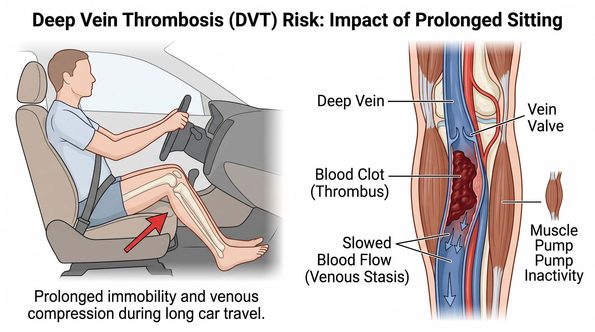
Your Sitting Position Matters More Than You Think
The solution is not only in buying compression socks or stopping by frequently. The way you sit behind the wheel impacts your leg health more than you think. Slouching or sitting too low compresses the back of your knees and thighs. Such a sitting position makes it harder for blood to flow freely, so make sure to avoid sitting like this as much as possible. Instead, try to keep your knees somewhere near the level of your hips. Avoid tucking your legs underneath you.
Tips For Maintaining Normal Leg Health On The Road
- Make sure to stay hydrated! Dehydration thickens the blood, which increases the potential risk of clotting.
- Wear compression socks on long drives.
- Flex and rotate your ankles whenever it’s possible during driving.
- Adjust your sitting position when you remember. It will ease the vein pressure. However, don’t change your seat position as this should be set to give you the best control of the steering wheel and pedals.
- If you use cruise control, you can move your right leg a bit to give it a rest. Your left leg can be moved frequently as it is hardly used.
- Stop every two or three hours and take a short walk. Usually, five minutes is enough to benefit your legs.
Warning Signs That Should Never Be Overlooked
A puffy feeling in your leg is a normal occurrence after a long road trip, and it happens to everyone. It usually goes away fast – as soon as you start moving your legs again. The problem starts when the swelling lasts longer than usual, and you experience pain, redness, and warmth in the specific area. These signs are not basic symptoms of road trip leg numbness. It is a sign of something more serious, especially if it lasts for more than six hours. In such a situation, it is necessary to visit a doctor as soon as possible.
If you are a nervous driver, you may also hold tension in your legs which manifests as muscle cramps or stiffness
Long road trips can be a unique and wonderful experience, but for those who do it frequently, it may be something that requires certain precautionary measures. These measures are usually very easy to apply and yet can prevent many complications in the future. Road trips should be something remembered for beautiful scenery and unforgettable memories, not as something that caused discomfort or pain.


