
Understanding Hidden Transport Costs Before You Bid
Winning a vehicle at auction feels like the finish line, yet transport is where unexpected fees quietly pile up. A driver who skips a single prep step can face extra charges once the transport carrier shows up and finds the vehicle is not ready.
Auction platforms shape this whole experience from the first bid onward. For example, platforms such as A Better Bid operate as a licensed broker, letting the public bid on vehicles without a dealer license while paying the same wholesale prices dealers pay across hundreds of thousands of listings. Anyone ready to start that search can explore current listings on the platform where free registration and a refundable deposit open the door to live bidding and pre-bidding alike.
Where the Auction Purchase Journey Begins
Whether you’re buying your first vehicle or your tenth, the paperwork moves fast once the auction closes. Preparing your vehicle for transport does not need to be complicated and deciding to ship a car cross-country still beats a long solo drive for many buyers. Auto transport is one of the last steps buyers plan for, yet it often decides how the whole shipping experience feels afterwards.
Transport companies quote a base rate first and add fees later for anything outside a clean standard job. Shipping companies vary widely in how they price fuel surcharges and comparing more than one transport service before booking often reveals a better rate. Reading the fine print before booking a car shipping company protects a buyer from surprise charges once the truck is already loaded.
Choosing Between Open Transport and Enclosed Transport
A standard flatbed setup carries most vehicles across the country every single day and it usually costs less than the alternative. A closed trailer shields a vehicle from weather and road debris, which is more important for a rare or high-value purchase.
| Transport Type | Typical Cost | Best For |
| Standard trailer | Lower | Everyday vehicles |
| Closed trailer | Higher | Classic or luxury vehicles |
Auto transport companies usually price a closed trailer thirty to sixty percent above the standard rate, so weigh the value of the vehicle against that premium before choosing.
9 Steps to Prepare Your Car for Shipping
Learning to prepare your vehicle for auto transport starts with a simple checklist and here are the key steps to prepare your vehicle before the carrier arrives.
- Wash the exterior so every scratch and dent shows clearly
- Remove personal items and loose belongings from every seat
- Check tyre pressure and confirm each tyre stays properly inflated
- Secure loose parts like mirrors, a bike rack or a cargo rack and take off any roof racks that are not bolted down
- Disable the alarm system so it does not drain the battery
- Photograph the vehicle from all angles for a paper record
- Leave a quarter tank of fuel rather than a full one
- Check for fluid leak signs under the engine
- Confirm the vehicle is in good condition and the car is ready for shipping before signing paperwork
This kind of preparation only takes an afternoon, yet skipping it invites disputes once the truck departs.
Cleaning and Inspecting Before Pickup
A clean car makes it easier for the driver to spot problems during the pre-loading inspection. Inspect your vehicle in daylight, walking a slow circle so nothing gets missed.
Ensure your vehicle is ready by checking the coolant level, since a low reading can point to a leak worth fixing before the trip. A signed inspection form helps protect your vehicle if a dispute comes up later, and it provides real peace of mind before the truck leaves.
What to Remove From the Vehicle
Prepare your car by clearing out personal belongings in your car, since most transport carriers are not licensed to move household items alongside a vehicle. Items left in the vehicle can shift during transit and cause scratches nobody wants to argue about later.
Make sure your car holds nothing loose in the trunk or glovebox. Any items in the vehicle beyond factory equipment usually void the carrier’s liability coverage and a single forgotten bag can become the reason a claim gets denied.
Mechanical Checks That Prevent Surprises
Mechanical issues rarely announce themselves until a truck ramp puts stress on every joint. A soft brake pedal or a slipping belt can turn loading day into a delay nobody planned for.
Consider having a technician inspect belts, hoses and the battery a week ahead. Confirm the vehicle will be ready at the agreed pickup window, since that small step protects a car transport booking from last-minute cancellation fees. A quick checklist confirms the car is ready for transport before the driver ever signs the bill of lading.
Documenting Existing Damage
A written and photographed record of existing damage protects both sides of the transaction. Insurance coverage from the shipping company rarely covers a scratch nobody can prove existed beforehand.
Ensure that your vehicle gets a full walk around inspection with the driver present, both at pickup and again at drop off the vehicle stage. A licensed carrier with clean reviews means the vehicle is in safe hands the whole way and clear communication throughout the transport process prevents most misunderstandings.
What Happens During Transit
Once the vehicle is loaded onto the trailer, the transport process settles into a rhythm of highway miles and scheduled check-ins. Movement of the vehicle during transport is normal, even when everything is secured properly and tracking a shipment online has become standard across most carriers today. The weight of the vehicle and its position on the trailer both affect how smoothly the ride goes.
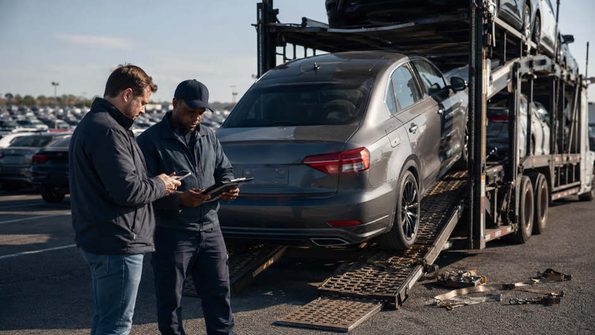
A vehicle while in transit can shift slightly even when properly secured, which is exactly why loading straps get checked at every stop. Once a car is shipped, tracking updates usually arrive by text or email and a driver who can load and unload quickly at each stop keeps the whole route on schedule. A vehicle sitting on the lot still needs a final walkaround before the driver signs off and a car carrier can hold several vehicles stacked across two levels. Guiding the vehicle onto the transporter takes a steady hand from an experienced driver.
Conclusion
Ensuring your car is ready for pickup helps ensure a smooth and worry-free transport experience out of what could be a stressful shipping process. Inform the transport company about anything unusual before the truck arrives and stay in contact with the transport company to ensure nothing gets missed on pickup day. A buyer who treats vehicle preparation seriously rarely pays a single hidden fee once the vehicle is picked up for transport.
FAQ
Can weather delay a scheduled pickup for auto transport?
Yes, storms and flooding often push a transport truck several days behind its original schedule.
Does a car shipping checklist really prevent disputes with the carrier?
Mostly yes, since photos and a signed inspection form settle most arguments before they start.
Is a standard open trailer safe enough for a daily driver headed cross-country?
Generally yes, since millions of vehicles travel this way every year without major issues.
What happens if the vehicle’s mileage does not match the paperwork at delivery?
The driver notes the discrepancy on the bill of lading, which protects both the carrier and the buyer.
Should a buyer worry about moving around during transport damage on a short trip?
Short routes carry less risk overall, though the same prep steps still apply regardless of distance.


