
Modern vehicles collect and process a surprising amount of personal information. Navigation history, driver profiles, phone contacts, vehicle diagnostics, and location data are often stored or transmitted through connected car platforms. Because of this, protecting personal data in automotive systems has become an important part of vehicle safety and digital privacy.
Car manufacturers, software providers, dealerships, and drivers all share responsibility for keeping this information secure. When security practices are weak or systems are poorly configured, the data stored in vehicles can become a valuable target for cybercriminals.
Understanding how automotive data is handled and implementing simple security practices can significantly reduce the risk of data leaks and unauthorised access
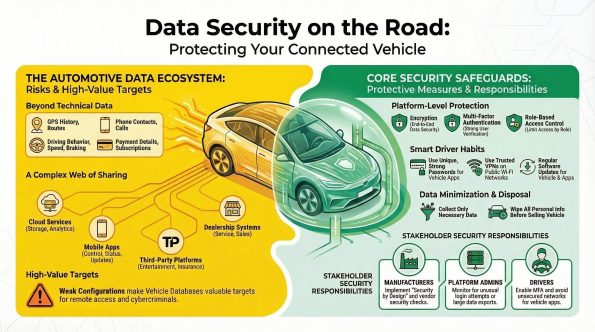
Why Automotive Data Requires Special Protection
Vehicle data is not just technical information about the car. Many modern vehicles collect sensitive personal details about drivers and passengers.
Common types of automotive data include:
- GPS location history
- Driver behaviour data
- Phone contacts and call logs
- Connected app accounts
- Payment information for tolls or charging stations
- Vehicle diagnostics and maintenance records
This information often flows between several systems: the car itself, mobile apps, cloud services, dealership networks, and third-party platforms such as navigation or entertainment services.
Regulations such as GDPR in Europe and various consumer privacy laws in other regions require manufacturers and service providers to protect this data and notify users in case of breaches.
The Growing Cybersecurity Challenge in the Automotive Industry
Connected vehicles are increasingly becoming targets for cyber incidents. Reports from cybersecurity researchers show that vulnerabilities in vehicle software, cloud platforms, or connected mobile apps can expose large amounts of driver data.
In recent years, security researchers have identified exposed vehicle databases, compromised fleet management platforms, and vulnerabilities that allowed remote access to vehicle systems.
While many manufacturers are improving security practices, the rapid growth of connected services means data protection must remain a constant priority.
Network Security and the Role of VPNs
One layer of protection when accessing vehicle platforms remotely is secure network connectivity. Drivers frequently connect to their car accounts through mobile apps while using public Wi-Fi in hotels, cafes, or charging stations.
A trusted VPN can encrypt internet traffic and protect login sessions from potential interception on public networks. Some security services also provide breach-monitoring tools that notify users if their credentials appear in leaked databases.
For example, a data breach alert tool can notify users when their credentials are exposed online, helping them react quickly and secure their accounts.
These tools are not a complete solution, but they can add an additional layer of protection when accessing automotive platforms remotely.
Essential Security Features Every Automotive Platform Should Have
Encrypted data storage and transmission
All communication between vehicles, apps, and cloud servers should be protected using strong encryption such as TLS. Sensitive information stored in databases or backups should also be encrypted.
Encryption reduces the value of stolen data if systems are compromised.
Role-based access control
Not every employee or service provider should have full access to vehicle data. Access should be limited based on specific roles.
For example:
- Service technicians may need diagnostic data
- Customer support teams may access account details
- Developers should not automatically have access to personal driver information
Multi-factor authentication
Accounts connected to vehicle platforms should support multi-factor authentication (MFA). This is especially important for:
- fleet management dashboards
- dealership systems
- manufacturer administration panels
MFA helps prevent unauthorised access even if passwords are compromised.
Monitoring and logging
Automotive platforms should track system access and detect unusual behaviour such as repeated login attempts, unusual location access, or large data exports.
Automated alerts allow security teams to respond quickly before incidents escalate.
Vendor security checks
Connected vehicles rely on multiple third-party services, including navigation providers, payment systems, and entertainment platforms.
Manufacturers must verify that these vendors follow strict security standards and maintain clear contractual requirements for protecting user data.
Practical Security Tips for Drivers
Drivers also play a role in protecting their automotive data. A few simple habits can significantly reduce risks.
Recommended practices include:
- Use strong and unique passwords for vehicle apps
- Enable multi-factor authentication whenever possible
- Avoid connecting vehicle accounts through unsecured networks
- Regularly update vehicle software and mobile apps
- Remove personal data from the vehicle before selling or returning a car
When using browser tools or extensions related to vehicle services, users should verify permissions carefully. Some free extensions may request excessive access to personal information.
Incident Preparedness and Security Policies
Technology alone cannot prevent every incident. Clear policies and training are also necessary for companies managing automotive platforms.
Important measures include:
Transparent privacy policies
Drivers should understand what data is collected, how it is used, and how long it is stored.
Staff training
Dealership employees, service teams, and platform administrators should receive regular training on phishing prevention, secure data handling, and device security.
Incident response planning
Companies should maintain a documented plan for handling security incidents. This plan should include:
- identifying affected systems
- notifying users and regulators
- containing the breach
- investigating root causes
Fast detection and response can significantly reduce the impact of a data breach.
Data Minimisation and Safer Default Settings
Automotive platforms should collect only the data that is necessary for their services.
Optional features that require personal information should be opt-in rather than enabled by default. Privacy-friendly default settings help reduce the risk of unnecessary data exposure.
Stored data should also be retained only for the time required by regulations or operational needs.
What to Do if a Data Breach Occurs
If a security incident happens, organisations should act quickly.
Typical response steps include:
- Isolate affected systems
- Use logs to determine the scope of the breach
- Notify affected users and regulatory authorities if required
- Reset compromised credentials and monitor suspicious activity
- Conduct a full investigation to prevent similar incidents in the future
In certain cases, companies may also offer identity monitoring services to affected users.
Security by Design for Automotive Software Developers
Developers building automotive platforms can strengthen privacy protection by integrating security features directly into system design.
Best practices include:
- pseudonymising or hashing identifiers
- providing detailed administrator logs
- offering data export and deletion tools for users
- restricting the use of driver data for analytics without explicit consent
- integrating automated compliance tools, such as data retention controls
Designing privacy features from the beginning reduces the cost and complexity of future security improvements.
Final Thoughts
Protecting driver data in connected vehicles requires a combination of technology, policies, and responsible user behaviour. Security tools such as VPNs and breach-alert services can help reduce risks, but they are only one part of a broader strategy.
Strong system design, clear vendor contracts, regular audits, and everyday security awareness are equally important.
Starting with a simple checklist and continuously improving security practices is one of the most effective ways to keep automotive platforms safe in an increasingly connected world.


